
The oceans make up 71% of our planet, and we are just now beginning to unlock its potential to power our world! According to the National Renewable Energy Laboratory, marine energy is the largest potential energy source in the world. Marine energy includes tidal energy, which harnesses waves in the ocean to continuously produce power. At the time this article was written, there is a tidal energy turbine in Scotland that has been spinning continuously for over six years. The turbine has not needed any sort of maintenance, even in a tough environment. This is a significant milestone that shows that tidal energy can realistically be adopted at a larger scale.
How Does Tidal Energy Work?
The power of ocean tides comes from the gravitational pull of the moon and the rotation of the earth. Each day, there are two predictable periods of high tides and low tides. A high tide happens when the moon’s gravity pulls Earth’s water towards it. This causes a “bulge” in the water level on the sides of the Earth facing towards the moon and on the direct opposite side. As the Earth rotates, the side of the Earth facing towards the moon and the side facing directly opposite will experience a higher ocean level. The low tides are directly between the high tides. These changes in tide cause movement in the ocean, which can be harnessed into electricity.

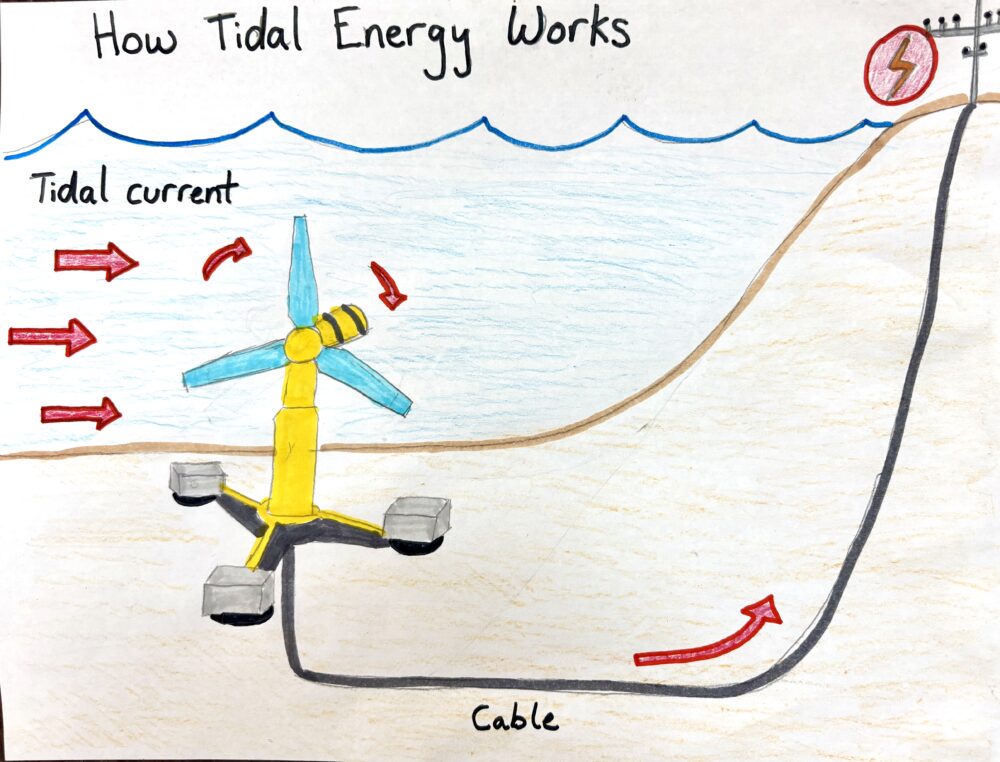
In Scotland, the tidal energy turbines essentially look like wind turbines placed underwater, with the power of the tides rotating the blades. The type of machinery used depends on the business installing them. Aquantis Tech, a company based in Santa Barbara, California, is developing and testing a tidal-powered tug, which is made of a buoy-like platform with a two-blade underwater rotor.
Costs and Benefits
With any type of new energy source, we need to consider whether the benefits actually outweigh the costs, including the potential environmental impacts. For tidal energy to work, the currents must be strong enough. The four turbines off the coast of Scotland are located at the Sound of the Pentland Firth, which is known for strong tidal currents, but tidal energy is not feasible for every coastline. There is also a lack of system when it comes to licensing these projects since this is such a new energy source. Businesses working in clean energy systems must be willing to spend years overcoming the obstacles to obtain approval before installing the machinery. However, the biggest advantage is the reliability of tidal energy. Unlike sunshine and wind, there will always be waves, so these structures can produce power every second of every day. Scientists can monitor the tides so that they can expect how much power will be produced at any given time.
Offshore tidal energy, such as the turbines in Scotland, is expensive to install, and has higher potential to affect marine wildlife. However, there is a solution to these issues in the works. Onshore wave energy systems keep most of the machinery out of the water and are built off of existing ports and structures, meaning that they have less of an environmental impact.
How Does Wave Energy Work?
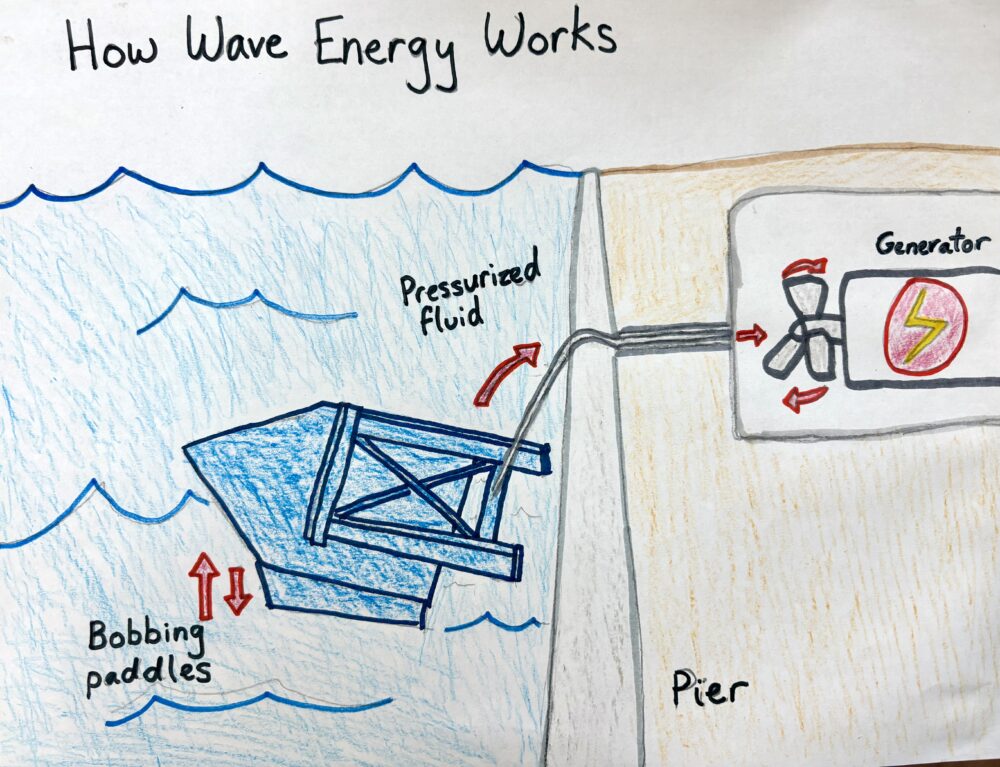
Waves are mainly caused by friction from the wind. It transfers energy to the surface of the water, moving it in a circular motion. Like tidal energy, wave energy is also reliable and predictable. During high tide, there is a larger volume of water being carried by the wind, making waves larger and more powerful. To harness the power of these waves, floating paddles bob up and down on the water. This sends pressurized fluid through pipes to a container on the pier. From there, a hydro motor is connected to a generator and electricity is produced.
Clean, Cost-Effective, and Eco-Friendly Energy Close to Home
In September of 2025, the very first onshore wave energy project was launched in California’s Port of Los Angeles. There are currently seven steel floats in the water, enough to power about 100 homes, but the goal is to extend the floaters to cover eight miles of the port, which will provide energy for 60,000 homes. This has been a relatively cost-effective endeavor. The pilot project at LA Port cost under $1 million, which is similar in cost to onshore wind, and costs less than offshore wind power. The floaters belong to the Swedish company Eco Wave Power, which is pursuing similar projects in New Jersey as well as several other countries around the world. The coast of Southern California provides great conditions for wave energy to power our community!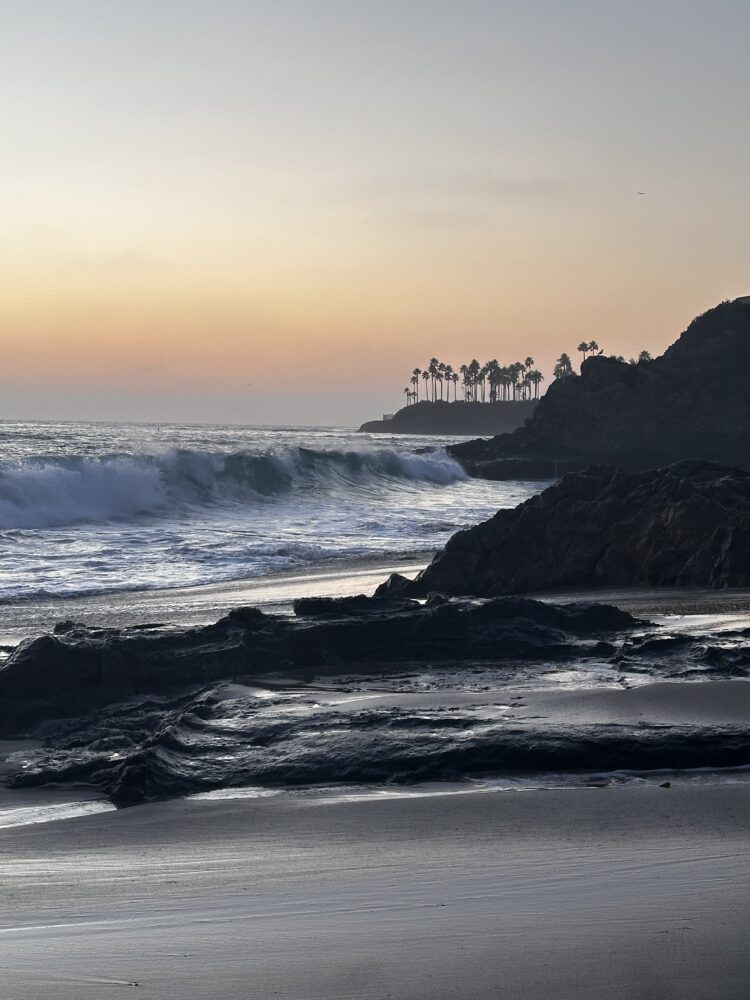
Powering Our Future
The future of marine energy is looking bright, although it will likely take many years for this technology to become a widespread energy source. There are many hoops to jump through before a business can begin to develop the energy systems. It took about two years to get licensing to start the pilot project at the Port of LA. In the end, the years of effort will be worth it. Marine energy has the potential to provide communities with 100% clean energy. This is LA’s goal by 2035, which will help California reach its plan to be carbon neutral by 2045. Marine energy only makes up a small percentage of our energy production today, but has the potential to supply about 57% of our energy in the future!
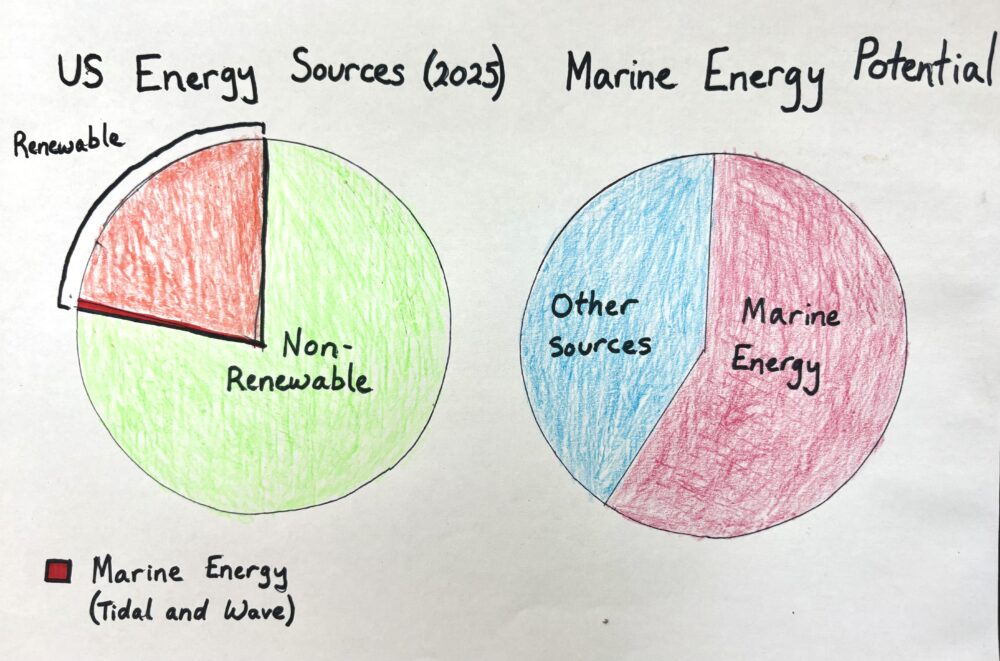
Marine energy only makes up a small percentage of our energy production today, but has the potential to supply about 57% of our total energy (both renewable and non-renewable) in the future!
How Will I Teach “How Will I Get My Electricity?”
At High Trails, we are always looking for ways to make course content relevant and personal to our students. What better way to do that than to show them how their community is paving the way for a new source of clean energy? In Environmental Awareness class, we spend time discussing how we currently get most of our energy (gasoline, fossil fuels, etc.) and other energy sources in our area. Most students have seen solar panels and windmills, and know about electric cars. Some of them may even be familiar with hydroelectric power. My students have been fascinated when I share that there are new tidal energy structures built so close by that could power their homes someday. Towards the end of class, we complete an experiment titled “How Will I Get My Energy?” It shows students that while alternative energy sources are harder to get initially than oil (students must crawl, hop, or move in some other kind of silly way rather than walk to obtain their electricity), those alternative energy sources will never run out, while oil eventually will. At this time, marine energy might be even more difficult to obtain. There are the upfront costs of building new machinery, and the complex process of getting approval to use it. Maybe for marine energy, students need to travel twice as far to get their electricity, but they end up with double the amount since it is such a reliable energy source. Something for us Instructors to consider as we plan for this part of the class!
Sources:
Developing Marine Energy Technologies to Expand and Diversify the U.S. Energy Portfolio. (n.d.). Energy.gov. https://www.energy.gov/eere/water/articles/developing-marine-energy-technologies-expand-and-diversify-us-energy-portfolio
How U.S. Marine Energy Test Sites Are Driving Innovation – National Hydropower Association. (2025, June 2). National Hydropower Association. https://www.hydro.org/powerhouse/article/how-u-s-marine-energy-test-sites-are-driving-innovation/
https://apnews.com/author/jennifer-mcdermott. (2025, July 7). Underwater turbine spinning for 6 years off Scotland’s coast is a breakthrough for tidal energy. AP News. https://apnews.com/article/tidal-energy-turbine-marine-meygen-scotland-ffff3a7082205b33b612a1417e1ec6d6
Smith, H. (2025, September 10). First onshore wave energy project in the U.S. launches in Los Angeles. Los Angeles Times. https://www.latimes.com/environment/story/2025-09-10/the-first-onshore-wave-energy-project-in-the-u-s-launches-in-los-angeles
Stokel-Walker, C. (2025, May 9). Tidal Power Is More Reliable Than Solar. Why Aren’t We Using It? Inc. https://www.inc.com/chris-stokel-walker/tidal-power-is-more-reliable-than-solar-why-arent-we-using-it/91184253
Drawings done by Meg Swords
At High Trails Outdoor Science School, we ask our instructors to write about elementary outdoor education, teaching outside, learning outside, our dirty classroom (the forest), environmental science, outdoor science, and all other tree-hugging student and kid loving things that keep us engaged, passionate, driven, loving our job, digging our life, and spreading the word to anyone whose attention we can hold for long enough actually to make it through reading this entire sentence. Whew…. www.dirtyclassroom.com
Comments are closed.